Engaging Script Font for Small Business Branding
As a small business owner who designs most of my own marketing materials—from product labels and Instagram stories to café menus and thank-you cards—I’ve learned that font choice isn’t just about aesthetics. It’s one of the quietest, most powerful tools I have to build trust, reinforce personality, and make every customer touchpoint feel intentional. That’s why I chose Engaging: a romantic calligraphy font with natural flow and modern clarity. It doesn’t shout—it invites. And in a crowded marketplace, that kind of warmth makes all the difference.
A Font That Feels Human—Without Losing Professionalism
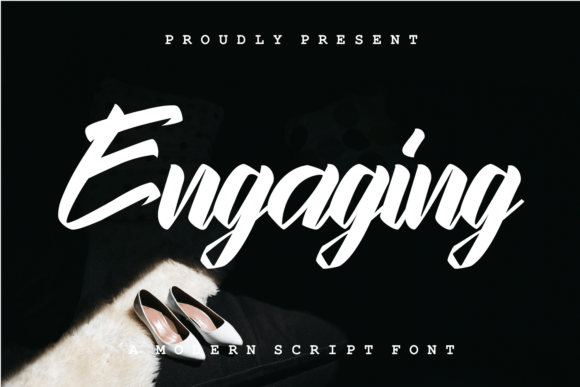
Engaging sits beautifully between tradition and today. Its strokes mimic hand-drawn elegance—soft entry and exit points, gentle contrast, and subtle rhythm—but it’s carefully engineered for consistency across sizes and formats. Unlike some script fonts that blur at small scales or collapse on mobile screens, Engaging holds its shape. I use it for handwritten-style quotes on Instagram posts, and it stays legible even in 24px thumbnails. On product packaging—like my lavender-scented candle labels—it adds artisanal charm without sacrificing readability at 10pt print size.
Where Engaging Fits Across Your Brand Touchpoints
This isn’t a font you’d use for body text in a long email newsletter—but it shines where attention matters most. Here’s how I apply it across real business needs:
- Logos & logotypes: Paired with a clean sans serif (like Montserrat or Inter), Engaging becomes the memorable “signature” part of my brand mark—ideal for boutiques, coaching services, or handmade goods.
- Packaging & product labels: Used for brand names and flavor names (e.g., “Honey Vanilla” on a soap bar), it signals care and craftsmanship.
- Menus & printed collateral: At my neighborhood café, I set drink specials in Engaging as accent headers beside clean body type—warm but never overwhelming.
- Social media graphics: For Pinterest quote pins or Instagram story highlights, it adds visual cohesion without needing custom illustration.
- Website banners & hero sections: A single line in Engaging (“Welcome to our studio”) sets tone faster than any stock photo.
- Thank-you cards & stickers: Printed on kraft paper or matte sticker stock, it feels personal—not templated.
Why Consistency Starts With One Thoughtful Typeface
When customers see your logo on a tote bag, then spot the same graceful curve in your email subject line or product tag, something subtle clicks: This is one voice. One person—or team—behind it. That perception of consistency builds credibility. Engaging helps me achieve that because it’s versatile enough to scale from a 3-inch embroidery patch to a 48-inch trade show banner—without losing its character. It doesn’t try to be everything; it excels where expressiveness matters most.
Smart Pairing Keeps Your Brand Balanced
I always pair Engaging with a highly readable supporting font. For digital use, I lean into neutral sans serifs like Poppins or Lato—they ground the romance in clarity. For print-heavy brands (think stationery shops or wedding planners), I’ll pair it with a warm serif like Playfair Display for headings and a clean sans for captions. The rule? Let Engaging lead the emotion—and let the secondary font handle the information. Never force it into paragraphs or fine print. Its strength is in presence, not endurance.
Testing Before You Commit
Before locking Engaging into my full brand system, I ran three quick tests:
- I printed sample product labels at actual size—checked legibility under store lighting and on matte vs. glossy stock.
- I previewed Instagram post mockups on both iPhone and Android screens to confirm stroke clarity at thumbnail size.
- I exported a PDF of my menu with Engaging embedded and opened it on a friend’s laptop—no font substitution glitches.
Small steps—but they saved me from last-minute redesigns when a font didn’t behave as expected in production.
Licensing Matters—Especially for Product-Based Businesses
If you sell physical products, digital templates, or client work, double-check the license for Engaging. As a Script Amp font, it’s designed for commercial use—but terms vary. Some licenses cover unlimited web use but require add-ons for merchandise or app integration. I verified mine covered packaging, social templates, and client deliverables before using it on my candle jars and Canva branding kits. Skipping this step risks takedowns or legal friction down the road—especially if your product goes viral.
Real Examples, Real Results
A local florist used Engaging for her shop name on storefront signage and matching thank-you tags—customers told her it “felt like receiving a note from a friend.” A skincare maker applied it to batch-number stamps on glass serum bottles, turning functional info into part of the luxury experience. Even a freelance financial coach softened her brand by using Engaging only for her tagline (“Clarity, Calmly Delivered”)—keeping numbers and bullet points in a crisp sans serif. In each case, the font didn’t change what they offered—but it changed how people felt receiving it.
Not Every Font Needs to Do Everything
Engaging won’t replace your body font. It won’t format your spreadsheet. But as a display font, it does one thing exceptionally well: it connects. It tells people, quietly and confidently, that your business values beauty, intention, and human detail. And in an age of algorithm-driven sameness, that kind of authenticity isn’t decorative—it’s strategic.